Information as of 2019/03/01
Nintendo game machine history
~History of Nintendo game consoles~
Nintendo was founded 70 years on November 20, 2017. Let's look back on the history of Nintendo so far.
There is also a startup sound collection (sometimes it can not be played).
Color Video Game 15 · Color Video Game 6 (1st Generation)
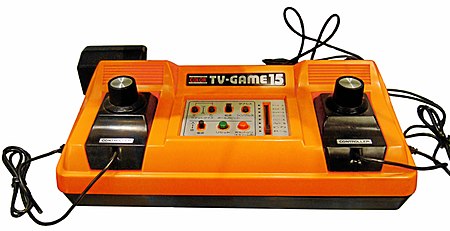
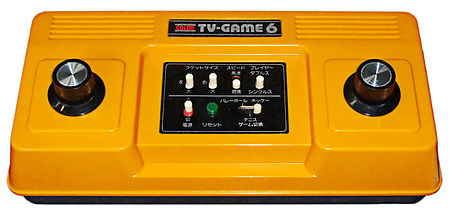
The upper left photo is "15" and the right photo is "6".
In 1977, it sold 1 million units of Nintendo's first home video game. The former was jointly developed by calculator maker "Sys Tech" and Mitsubishi Electric, and in response to the bankruptcy of Systech, Mitsubishi Electric brought in a plan to Nintendo, and further improved it and came to the market. The contents are mainly a kind of tennis or table tennis game represented by "Pon". There were two controllers connected to the body by a cable, and each player could operate by holding the controller in his hand.
Released along with the low-end version "Color Video Game 6 (Color Video Game Six)". In the video game 6, 9 game switches (number of games that can be played) of the video game 15 are omitted, and the game controller is also directly attached, so the price difference of ¥ 5,000 or more at the price is more popular “15” is more popular Was high. This is attributed to Nintendo's sales strategy. As for the price, "6", which was an inexpensive version, has a price of 9,800 yen, and "15" is 15,000 yen.
GAME&Watch(Second generation)

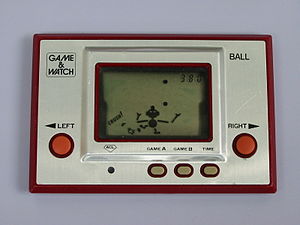
A portable liquid crystal game machine (electronic game, LSI game) released by Nintendo from 1980. The common name for commercials etc is "game watch". Sales amounted to 12.287 million in Japan and 43.4 million in the world.
Game software is "1 hardware 1 software" written in ROM in the main unit, and it is impossible to execute various software by cartridge exchange like a game machine after that. It can be used as a watch while not playing games, and this is the origin of the product name "Game & Watch". Later, I came to have an alarm function. The game and watch's work has been ported to other hardware. For example, it is made to appear in the large scuffle smash Brothers's hidden characters.
Family computer (third generation)

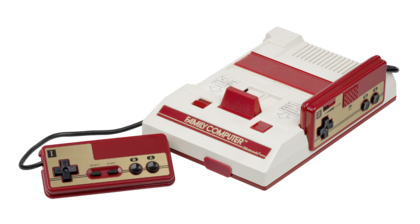
A home-use game console released on July 15, 1983. Abbreviation is NES. 61.91 million units were sold worldwide. The best selling software is Super Mario Bros., which has sold 40.24 million copies worldwide. In addition, in 2016 (Heisei 28), Nintendo Classic mini family computer was released with built-in 30 pieces of software and redesigned the original case with a miniaturized design. The controller II (II-con, Tu-con) has a microphone, and the software can determine whether or not a voice of a certain size or more is input without a voice recognition function.
GAME BOY(Third generation)

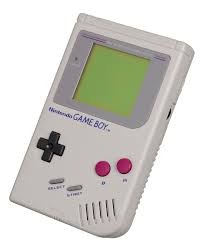
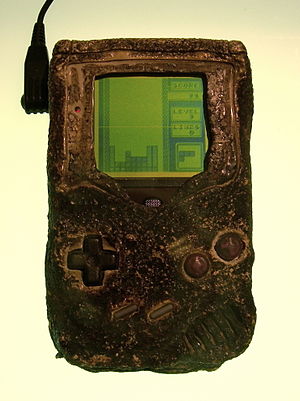
A portable game console released by Nintendo on April 21, 1989. The suggested retail price at the time of sale in Japan was 12,500 yen (tax included) → 8,000 yen. The abbreviation is GB. The product code is DMG, derived from "Dot Matrix Game". Also, for the first time as a portable game console, cumulative sales reached 100 million units. The company sold 32.47 million units in Japan and 118.69 million units worldwide. The highest selling software was 82.3 million copies of "Pokemon red and green" in Japan and 35 million copies of "Tetris" in the world. Also, the strength is the strongest, and the Game Boy has a tough endurance test and is designed to be robust. Nintendo provided the Game Boy to kill US soldiers during the Gulf War as "the only support for the game company." After that, there was an episode that the Game Boy found in the barracks that was destroyed by airstrike had a bad exterior, but there was no problem inside, and it worked normally. The Game Boy has since been stored and exhibited at Nintendo New York's Nintendo New York store, which can not be touched, but the Tetris demo screen is always running.
Super NES (4th generation)

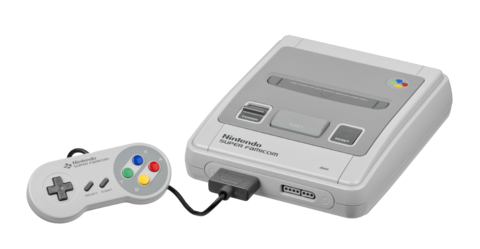
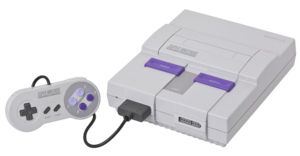
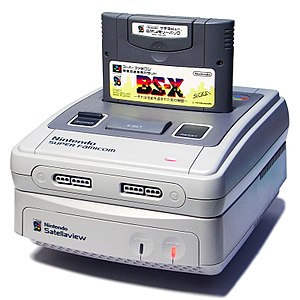
A home-use game console released on November 21st, 1990. Sales volume is 49.10 million units worldwide. The best selling software in Japan is "Super Mario Kart" with 3.81 million. In the world, 20.61 million "Super Mario World".
Also, there are Satella View (third photo from the left) and XBAND as online services.
NINTENDO64(Fifth generation)
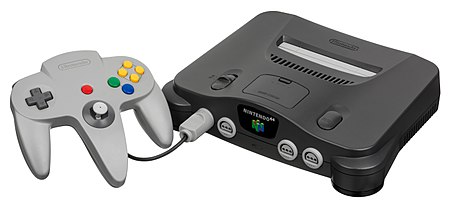
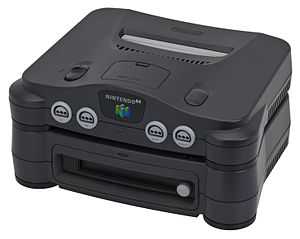
A home-use game console released in 1996. The successor to the next generation of the Super Nintendo, abbreviated as "64 (Rokuyon)", "N 64" and so on. The sales volume is 32.93 million units in the world. The highest-selling software sold 11.89 million units worldwide with Super Mario 64.
Also, 64 DD (the third picture from the left) exists as an online service.
GAME BOY pocket
Principali modelli di GAME BOY

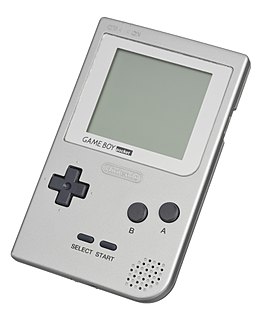
Nintendo released it on July 21, 1996. The initial price is 6,800 yen. The first price cut on February 14, 1998 resulted in ¥ 5,800, and the second price cut on November 14 of the same year resulted in ¥ 3,800. On April 14, 1998, Game Boy Light (GAMEBOY LIGHT) was released as a high-end model.
At the time of development, the cost was drastically reduced, and the price was cheaper than the first Game Boy. The lamp indicating the remaining amount of the battery was also removed (the latter model was revived), and the communication port (external expansion connector) was also considered to be abolished, saying that "If it is eliminated, cost reduction and further thinning can be expected." However, in response to strong repulsion from the software developer side, as a compromise, the shape of the connector was miniaturized and settled down by eliminating the connector cover. "Pocket monster" which made use of the communication function later made a big hit, but Takehiro Izushi who was involved in the development of the Gameboy pocket "If it was lost, it was not possible to exchange Pokemon. "I talk in a joke in a later interview.
GAME BOY LIGHT
GAME BOY Top Model

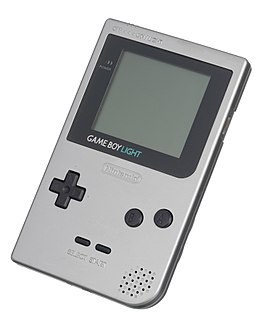
Nintendo released it on April 14, 1998. The suggested retail price is 6,800 yen. It has the same size as the Gameboy Pocket and has a backlight on the screen.
GAME BOY COLOR(Fourth generation)

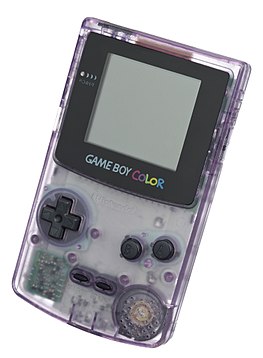
Nintendo released it on October 21, 1998. The company's Game Boy upward compatible machine. The abbreviation is GBC.
It was developed as a gameboy's upper compatible machine, and software for gameboy also works. It is now possible to display up to 56 colors out of 32,768 colors for a gameboy whose screen is 4 gradation monochrome. However, only the software released as Gameboy Color or Gameboy & Color common is displayed up to 56 colors, and the previous software is assigned 4 to 10 colors. As a display screen, the reflection type color liquid crystal "super mobile liquid crystal" developed by Sharp is adopted, and since it has no backlight compared with the conventional color liquid crystal, power saving is realized, and outdoor visibility is improved. Further, as added functions, there are color arrangement selection at start-up in monochrome software and an infrared communication function. The infrared communication function is the only function not inherited by Game Boy Advance.
In 1997, Nintendo intended to suddenly develop Game Boy Advance as Game Boy's next-generation portable game console, but it was rapidly developed and released from the demand of "mobile models in color" from software makers. It is It was originally planned to be released on January 21, 1998, but the planned release date was suddenly delayed. It is thought that it is the influence of the Pokemon shock that occurred in the previous year. As the standard color of the body, purple was adopted as the most popular color in market research in the United States. This color is inherited as the standard color of Game Boy Advance and Nintendo GameCube.
Online service, mobile adapter GB.
GAME BOY ADVANCE(Fifth generation)

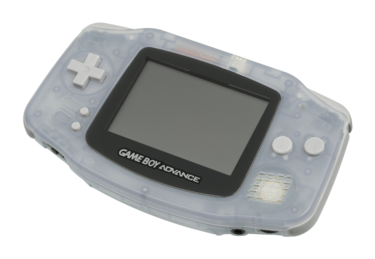
It was released on March 21, 2001. The abbreviation is "GBA". Some of the games released at Game Boy Advance are distributed via Virtual Console, a distribution service of 3DS and Wii U. (However, 3DS will be distributed only in the ambassador program)
The successor to the Game Boy (GB) series, which has been on the market since 1989, which has been released about 12 years later. In addition to the dedicated software, it was possible to use software for Game Boy and Game Boy Color. However, there are problems with some software. In particular, software using infrared rays of the GAME BOY COLOR era can not be used. The cartridge for Game Boy Advance has a notch on both sides of the back, and performs cartridge identification and CPU switching by the switch in the cartridge slot. The notch and the related mechanism were later used to prevent the Game Boy series software from physically entering the Nintendo DS or Game Boy Micro slot. It is highly compatible with the Gameboy series, and inherits all the behavior of Gameboy Color except infrared communication.
There are two plugs of different sizes at both ends of the communication cable for GBA, and there is a direction that the small plug becomes a player with a young number. This directivity is characterized in that, in addition to the identification of the player in the communication play, the 1 cartridge game compatible title sends data from the main body on the 1P side (the main body to which the small plug is connected) to the other main body. In the middle of the cable there is a box with a connector whose size fits into the small plug, and by connecting another cable to it, communication play of up to 4 people is possible.
In addition, mobile adapter GB and mobile system GB exist as an online service.
NINTENDO GAMECUBE(Sixth generation)


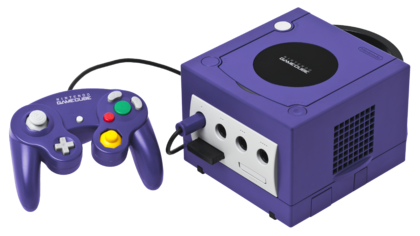
The release date in Japan is September 14, 2001. It was launched on November 18, 2001 in the United States and Canada, and on May 3, 2002 in Europe. The suggested retail price at the time of release in Japan was 25,000 yen. Abbreviated game cube, cube, GC, NGC. The development code name is "Dolphin". The model numbers for the main unit and related products are DOL. The sales volume was 21.74 million units worldwide. In addition, the highest sales software sold 7.70 million copies in the "Super scuffle smash Brothers" in the world.
There is Panasonic Q (Quee) (direct sales price 39,800 yen) as compatible hardware, and now it is traded for more than the direct sales price in a scarce condition. Also, you can use the port on the bottom of the main unit to load Game Boy players and use Game Boy software.
GAME BOY ADVANCE SP
GAME BOY ADVANCE upper model

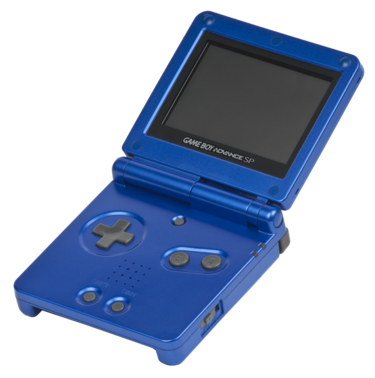
Portable game console released by Nintendo on February 14, 2003. It is positioned as a high-end model of Game Boy Advance. Abbreviated as GBASP.
In addition to enhancing the portability and liquid crystal protection performance by folding the body, the liquid crystal becomes a reflective TFT color liquid crystal with a front light, making it easier to see the screen even in dark places. However, the front light has a slight effect on the color of the screen. The folding design has won the 2003 Good Design Award. The power supply is only the built-in lithium ion secondary battery. Replacement instructions are described in the instruction manual, and lithium ion batteries can be purchased directly from Nintendo official site and Nintendo as replacement parts. It can be operated for about 3 hours, usually 10 hours, with the front light turned off for 18 hours. The Game Boy series is not a dry cell battery, but it is the first to adopt a rechargeable secondary battery. The front lights were not able to solve the power consumption problem in the early Game Boy Advance, but they were dramatically disseminated due to the influence of mobile phones that began to show explosive popularity from around this time, color screens The installation has been realized because something appeared that can withstand the power consumption when using the front light. For this reason, the weight is the heaviest among series machines. Game Boy / Game Boy Color / Game Boy Advance games can be played. However, since the cartridge slot has been changed to be inserted from the lower side, normal play can not be expected for a game using a cartridge with a built-in tilt sensor such as "CoroColo". In the gameboy advance software that uses a tilt sensor in "CoroColo Puzzle Happy Panech!", It is possible to respond by entering a specific command on the option screen. The "Yosshi's universal gravity", which was released after it was sold, specifies which one is the main unit when the game is started, and "Made in Wario" is fully compatible because it is a type of sensor that detects the rotation of the main unit. Furthermore, when using the card e-reader, it is necessary to connect the communication cable to the communication port of the main body, not to the communication port of the reader. In addition, the hardware for Gameboy / Gameboy Color Software has not appeared in portable game machines released by the company since this model, and as of 2017, it is the last model compatible with Gameboy / Gameboy Color Software. The headphone jack has been removed. The expansion connector has been increased to two, and it is possible to use headphones by using an optional conversion plug for the new connector. Note that this terminal is shared with the attached AC adapter. There is still a terminal from Game Boy Advance. Incidentally, headphones and AC adapters can not be used because the connectors are hidden by the GBA cable and the wireless adapter when using communication with the game cube or wireless communication.
GAME BOY micro
GAME BOY ADVANCE top model

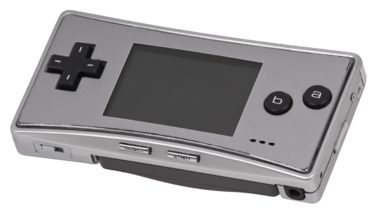
Software for Game Boy Advance can be used. Abbreviated as GBM. It was announced at E3 in 2005. In Japan, it launched on September 13, 2005, the 20th anniversary of "Super Mario Bros." It was launched on October 1, 2005 in China, October 2, 2005 in the United States, November 3, 2005 in Australia, and November 4, 2005 in Europe.
The company's Game Boy Advance is smaller and lighter with almost the same button layout. Aluminum is used as the material of the case. The cartridge slot is on the near side, slightly to the right, as viewed from the player. The front of the body is a removable face plate. The internal structure such as the processor is announced to be equivalent to the Game Boy Advance SP. However, the software that operates in the same way as the Nintendo DS released earlier is only the Game Boy Advance dedicated software, and the Game Boy cartridge, Game Boy & Color common cartridge, and the Game Boy Color dedicated cartridge do not operate. A projection is attached to prevent accidental insertion, and it is impossible to physically insert the Game Boy series cartridge (when inserted, it engages with the notch of the GBA cartridge. Also, the Nintendo DS GBA cartridge slot) As well). In addition, the headphone terminal which was not carried in SP is standard equipment.
Since Gameboy Micro's liquid crystal display has been changed to backlight from the Frontlight of Gameboy Advance SP (hereinafter, SP), the screen is much brighter and better in color development than the old model. However, the size of the screen has also been reduced by reducing the size of the main unit and enhancing portability. The price is higher than SP and the first Game Boy Advance, despite the fact that all peripheral devices available for pre-SP models are no longer available and Game Boy software is no longer playable, and the company's next-generation portable game console The Nintendo DS has already been released. Therefore, sales after launch were not good, and weekly sales were below SP. One of the gameboy micro color variations released in Japan is the "Famicom Color", which imitates a NES controller, and contains the Super Mario 20th Anniversary logo. In addition, because there was a reprint of "Super Mario Bros." which was released as NES mini in the simultaneous release software, Game Boy Micro also had an event-like connotation of the 20th anniversary of Super Mario release. Some Game Boy micro users combine it with the PLAY-YAN micro because of its portability and use it as a digital audio player like an iPod rather than a game.
I closed the banner of the Gameboy series with Gameboy Micro.
Nintendo DS(Sixth generation)

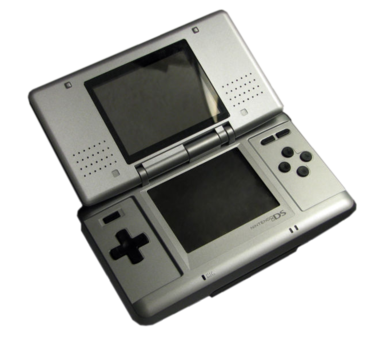
A portable game console released by Nintendo in 2004.
A series of "Touch! Generations" series that has two screens, an operation method (user interface) such as voice recognition with a touch screen and microphone, and a communication function such as passing communication. Was released. Compatibility with Gameboy Advance software has been achieved by incorporating ARM7TDMI, which is used in the Gameboy Advance CPU, as a sub CPU. The Z80-based processors that were in previous Game Boy series are not installed, and gameboy software can not be used. Therefore, there is a protrusion inside the Game Boy Advance Cartridge Slot, and the cartridge before Game Boy Color can not be physically inserted (as with Game Boy Micro). The communication connector of Game Boy Advance is not equipped, and the communication function of Game Boy Advance software can not be used. Similarly, peripherals for Game Boy Advance can not basically be used. The wireless communication of DS differs from the communication standard with the Game Boy Advance dedicated wireless adapter, and the wireless play of the advanced software becomes impossible. Also, Nintendo Wi-Fi connection exists as an online service.
Wii(Seventh generation)

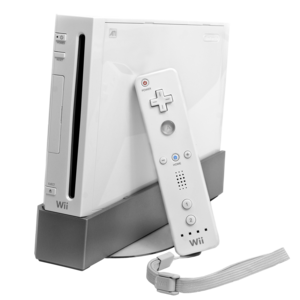
It is a hardware with a compatible function of NINTENDO GAMECUBE of the previous generation hardware released on December 2, 2006 in Japan. Wii Mini exists as compatible hardware. Sales amounted to 110.13 million units, which exceeded 100 million units worldwide. The highest selling software is 4.67 million in "New Super Mario Bros Wii" in Japan, and 82.49 million in "Wii Sports" in the world.
In addition, there are WiiConnect24, Nintendo Wi-Fi connection, Virtual Console, Wiiware, Wii channels as online services.
Nintendo DS Lite(Sixth generation)
NIntendo DS Top model

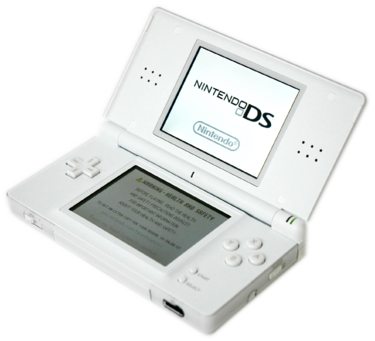
The suggested retail price was initially 16,800 yen (tax included), but became an open price from June 19, 2010.
The basic performance has been kept unchanged, and the design has been redesigned, as it has been reduced in size and weight to enhance portability. Originally released as a "high-end model of the Nintendo DS", the conventional DS was also sold in parallel, but the explosive hit of the DS also helped, similar to the Game Boy Advance and the Game Boy Advance SP released in the same way As a successor to the Nintendo DS, production and spread progressed. In Japan on March 2, 2006 in Australia on June 1, in the United States on June 11, in Europe on June 23, in China under the name iQue DS Lite on June 29 in Korea It was released by Ogen C & A on July 20, 2006, and was released by Nintendo of Korea on January 18, 2007. Also, Nintendo Wi-Fi connection exists as an online service.
Nintendo DSi・Nintendo DSi LL
Nintendo DS Top model

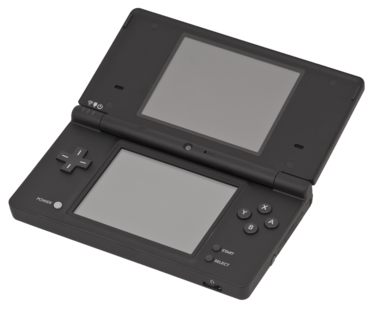

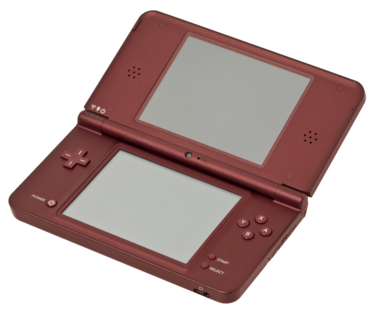
Nintendo DSi is a portable game console released by Nintendo on November 1, 2008. ※ The left picture
We introduce the large screen model "Nintendo DSi LL" of DSi released in Japan on November 21, 2009. ※ The photo on the right
October 2, 2008, "Nintendo Conference 2008. Fall" was announced. Kei Iwata, the president at the conference, has set a goal of "changing DS from one in a family to one with one kitchen" and to bring Nintendo DSi closer to the achievement of that goal. It announced that it developed. The tagline is to "My DS of my own specification." And the meaning of the above-mentioned "one person and one kitchen" is included. It is not positioned as a next-generation aircraft, but as a minor change model of the Nintendo DS, but its functions and specifications have been greatly changed compared to the conventional Nintendo DS. Therefore, there are software dedicated to Nintendo DSi and software whose behavior is different between DSi and old DS. (As an example, there is software that does not animate the icon when it is inserted into DSi.)
There is also a Nintendo Wi-Fi connection as an online service.
Nintendo 3DS・Nintendo 3DS LL(Seventh generation)

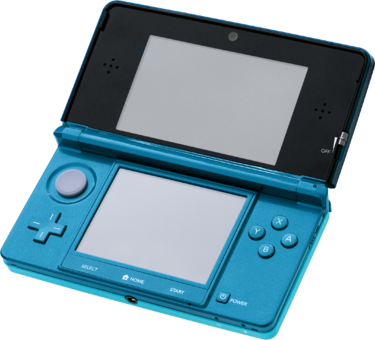

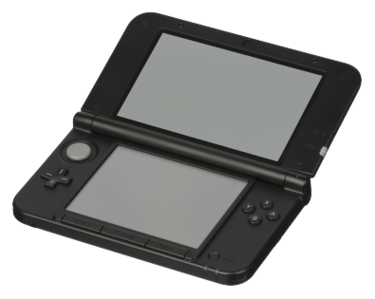
Starting with the release in Japan on February 26, 2011, it was sold worldwide. We have already finished production (production) and sales. It is a portable game machine that succeeds the Nintendo DS series released in 2004. The concept is "carry around, resonate, every day is new." In CM, etc., a catch phrase "3D DS without glasses" is also used. The storage capacity of the 3DS card has significantly increased, and it has been up to 2GB at the time of release, but some manufacturers have adopted 4GB cards since the middle of 2011. In addition, the maker who manufactures the game card is saying before the main body sale that "it is possible to correspond to 8GB as a production line", it is thought that the further large capacity ROM appears in the future. The shape is almost the same as the DS card, but it has a protrusion in the upper right corner and can not be inserted into the conventional Nintendo DS series DS card slot (it can not be recognized or executed even if it can be inserted by any method) ). The compatible function has a compatible function that the Nintendo DS series software, DSi / DSiLL dedicated Nintendo DSi ware can be played as it is. However, as with DSi and DSi LL, there are no GBA slots for inserting expansion equipment such as Game Boy Advance software or DS vibration cartridges.
There is also Nintendo Network as an online service.
WiiU(Eight generation)

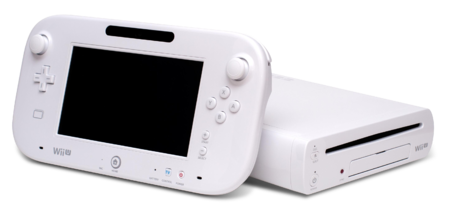
Home-use game consoles that have been released worldwide since 2012. It is a game machine that succeeds Wii. The concept is "Wii U if it gathers, but everyone alone Wii U." In Japanese commercials, the expression "super Wii" is also used. The sales volume is 13.56 million in the world. The highest selling software is 1.49 million in "Splatoon" in Japan, and 8.42 million in "Kario 8" in the world. Compatible with previous generation hardware Wii. Equipped with a controller "Wii U GamePad" equipped with a liquid crystal display, it can be played with two screens with a television / display or with only the controller screen. It supports 5.1ch surround, and is the first Nintendo video game console to support HD / 1080p video output. There are two variations of the initial release, with a premium set (32 GB of built-in flash memory and a stand included) and a basic set (8 GB of built-in flash memory).
In addition, there is Nintendo Network as an online service.
Nintendo 2DS
Nintendo 3DS Cheap edition

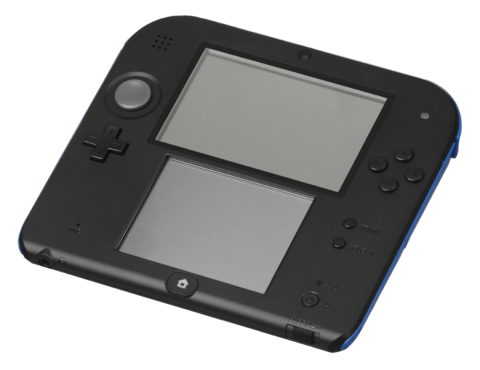
It was launched in Japan on February 27, 2016, and was launched in Korea on December 7, 2013 in North America, Europe, and Australia on October 12, 2013.
An inexpensive version of the Nintendo 3DS released in 2011 with the price reduced by lowering the autostereoscopic (3D image) function and the folding function, and making the stereo speakers monaural. Software is available for Nintendo 3DS and previous generation Nintendo DS. The back 3D camera is left, and 3D photography can be taken (but it can not be displayed in 3D with 2DS). In addition, sleep is a specification to operate the sleep switch under the main unit, and wireless communication can be switched by setting of the HOME menu (the side switch on 3DS is omitted). The performance is equivalent to 3DS, and it is not possible to play New Nintendo 3DS dedicated software (such as "Zenoblade"). Similarly, the C stick, ZL and ZR buttons mounted on the New Nintendo 3DS are not mounted, and there are no plans to release extended slide pads for the 2DS. In addition, "Pokemon Toretta Lab for Nintendo 3DS" does not correspond to 2DS because the shape of the main body is different. And "one seg reception adapter DS TV" does not stick because the foot of the base interferes. (It can be used if the legs are physically removed.)
Nintendo initially said that there were no plans to release the 2DS in Japan. From February 27, 2016, in conjunction with the start of offering the first generation Pokemon in the virtual console, it was sold for a limited time and in stores by installing Pokemon on a color virtual console conforming to the Pokemon. In Nintendo Direct on September 1 of the same year, it is announced that five colors will be released as regular products. Sales began on the 15th of the same month.
New Nintendo 3DS
Nintendo 3DS Top model

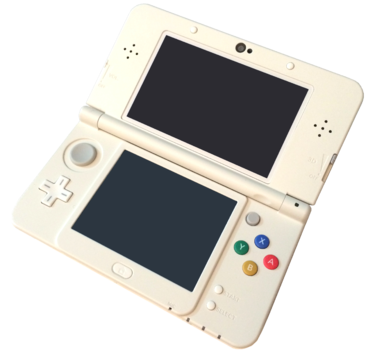

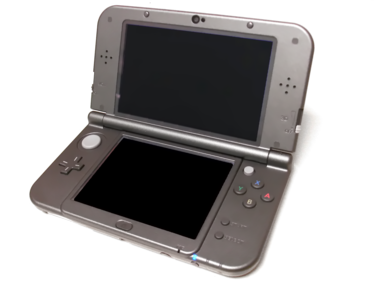
Portable game console released on October 11, 2014.
It was announced in "NINTENDO 3DS Direct 2014. 8.29" on August 29, 2014 (Heisei 26), and was released on October 11 of the same year as a Nintendo 3DS compatible machine. As a feature, NFC, C stick, ZL button, ZR button have been added, and it has become a part of extended slide pad of peripheral equipment (it can not use conventional extended slide pad). In addition, the performance has been improved over the old Nintendo 3DS and Nintendo 3DS LL. However, rather than the next-generation aircraft, it is positioned as a minor change model of the Nintendo 3DS. There is a 3D shake prevention function installed, and there is a sensor that recognizes the face with the inner camera of the main body. Even if the main body or the face moves greatly during operation (in combination with the gyro sensor), the position of the face is recognized and automatically adjusted. Fine adjustment is possible with the main unit settings.
Nintendo Switch(9th generation)
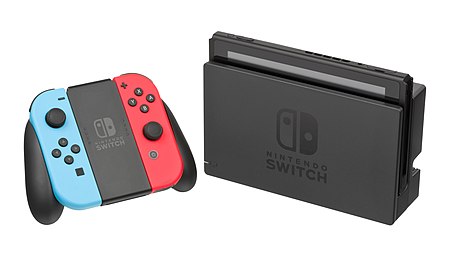
Hybrid game machine released on March 3, 2017. Nintendo will make "a game console that can be used as a portable game console," while making it a "game console that does not fall into the category of existing" stationary video game consoles. " The catch phrase in Japan is "change shape and go anywhere", "anytime, anywhere, with anyone" (in the package, it is expressed in English as "play anytime, anywhere, with anyone.").
The sales volume is 7.74 million in Japan and 32.27 million in the world. The highest sales software is 3.33 million units in Japan 'S Splatoon 2' and 15.2 million units in the world 'Mario Kart 8 Deluxe'. There is Nintendo Switch Online as an online service.
New Nintendo 2DS LL
New Nintendo 3DS LL Cheap model

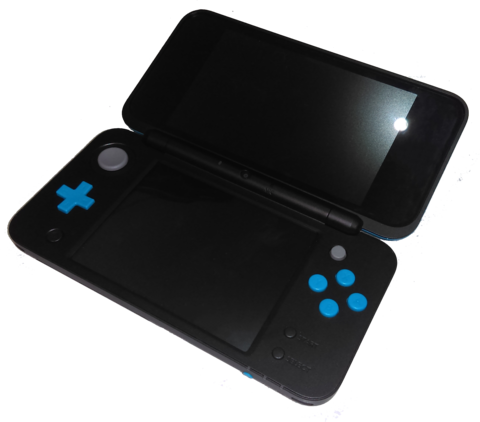
Released on July 13, 2017. An inexpensive model that keeps the price low by removing the autostereoscopic (3D) function from New Nintendo 3DS LL. Software is available for New Nintendo 3DS, Nintendo 3DS and previous generation Nintendo DS. There are some changes besides deletion of the autostereoscopic function.
· Change of the speaker position.
Abolition of strap holes.
Change of camera position (outside camera on lower screen side, inner camera on hinge part)
Change home button position (lower right of cross button)
Cover on 3DS card slot It came.
The battery can not be replaced by the user. Therefore, the microSD card slot moves next to the 3DS card slot (inside the cover). However, removal is easy. Management of microSD card with PC is usable as before.
· Abolished the screen brightness automatic adjustment function
.
Startup sound collection
I made it impossible to play to prevent server down.